What happened in the PRX vs G2 Valorant Champions Shanghai group stage match
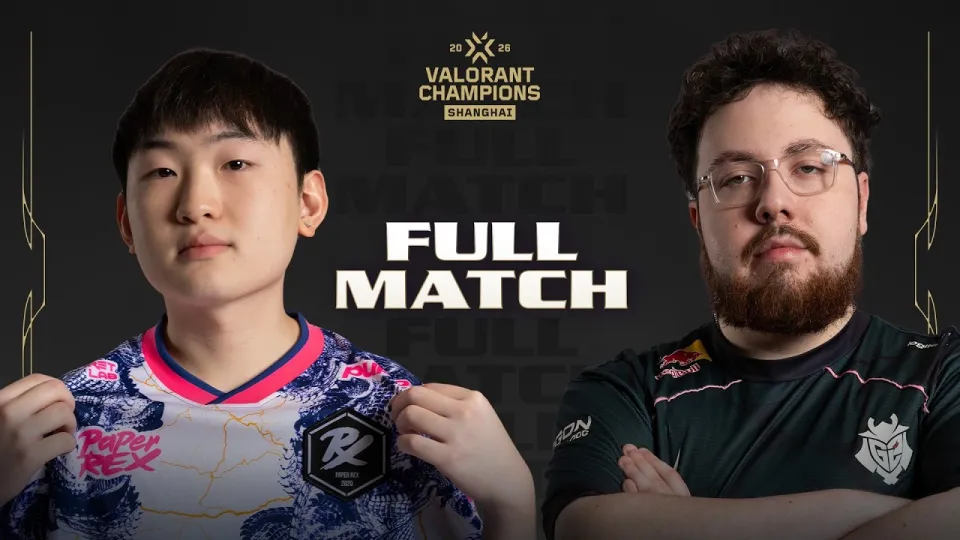
Video: PRX vs. G2 — FULL MATCH — VALORANT Champions Shanghai — Group Stage
Want articles like this for your own video to promote it on YouTube and Google? Order them through the Telegram bot @sat_sit_bot. It writes articles around your video, embeds the video and publishes them on popular niche websites (no ads). Your first 50 articles are free.
· based on the channel VALORANT Champions Tour
PRX vs G2 at VALORANT Champions Shanghai was a group stage series that turned into one of the loudest matches of the Swiss stage, decided by map-specific execution rather than one-sided dominance. It mattered because both rosters came into Shanghai needing a clean group record to avoid a brutal playoff bracket, and because the two teams have built a reputation for producing close, scrappy games whenever they meet. If you want the short version of the storylines, the full VOD is on the VALORANT Champions Tour channel, and live updates and clips keep landing on the official VALORANT Esports Twitter/X account.
What the Shanghai group stage format actually demands
VALORANT Champions Shanghai runs from September 24 to October 18, with sixteen teams from Americas, CN, EMEA and Pacific fighting for the year's biggest trophy. The group stage is where seasons die quietly: a single bad map pick or a lost pistol round can push a roster into a lower seed and a first-round playoff draw against a tournament favorite. That is why PRX vs G2 carried more weight than a normal group game. Both teams needed map control, economy discipline and a reliable second caller to close out rounds that swing on small details.
The broadcast also framed the event as a generational shift. Two Masters titles in 2026 went to new champions, and Shanghai is the place where familiar names, new contenders and a fearless wave of challengers all collide. For PRX and G2, that context means every series is also an audition for how far their style holds up against teams that have already adapted.
Haven and Split decide the tone of the series
Haven was the map that set the emotional temperature. Viewers repeatedly pointed to d4v41 as the player carrying his team on Haven, which usually means one thing: the map came down to retakes, post-plant holds and whether a single anchor could survive a full execute. On Haven, the team that wins the mid-round information battle usually wins the map, because the three-site layout punishes slow rotations. A roster that loses its A-link control early ends up bleeding utility and playing 4v5 retakes for the rest of the half.
Split told a different story. Trent drew praise for looking like a complete player on Split, and that map rewards exactly that profile. Split is the most structure-dependent map in the pool: mid control, ropes timing and B-main spacing decide whether an attack ever reaches the site with enough bodies. A player who can flex between sentinel duty and aggressive opening duels gives a team the option to change tempo without changing composition. That flexibility is what makes Split series so often decided in the veto room before the first pistol round.
Why the third map felt like a different match
By the third map, the series had shifted from a tactical grind into a momentum fight. One viewer described Invvy popping off on map three as the highlight of the night, and that pattern is common in long series: once both teams have burned their prepared defaults, the game becomes about individual confidence and mid-round improvisation. Teams that rely on set plays can look lost when the opponent starts taking unusual duels, and teams with a hot rifler can suddenly win rounds they have no business winning.
The flip side is fragility. A late mistake from Something became one of the most replayed moments of the match, and it illustrates how thin the margin is at this level. One overpeek, one missed trade or one greedy ultimate can hand the opponent a free round and reset an economy that took three rounds to build. In a group stage where map differential can decide seeding, those single moments are worth more than any highlight reel.
The Odin question and other chaos picks
One of the recurring talking points around this series was the Odin. A viewer joked that a team had to go for the heavy machine gun, and that reaction captures a real debate in competitive VALORANT: when is a chaos weapon actually correct? The Odin is not a standard buy, but it has legitimate uses. It shreds through smokes, punishes stacked sites, breaks utility-heavy executes and forces opponents to respect wallbang angles they normally ignore. It is also slow, expensive and punishing if the round goes wrong.
The same logic applies to other off-meta choices that show up in group stage games. A surprise Operator on defense, a double-controller setup or a shotgun anchor on a tight site all follow the same rule: they work when the opponent has no prepared answer and the economy allows a reset if the gamble fails. Against a disciplined team like G2 or a fast-tempo roster like PRX, chaos picks are less about surprise and more about forcing hesitation.
What viewers argued about after the match
Community reaction split along predictable lines. Some fans called it a banger and a genuinely fun watch, while others focused on specific moments that could have flipped the result. PRX supporters described the experience as nerve-wracking, which tracks for a team that plays fast, takes low-percentage duels and lives with the consequences.
A few viewers also asked about production details, from a possible audio cut to the identity of teams shown on the arena screens during the broadcast. Those questions are normal for a long VOD and rarely change how the match is judged. What matters competitively is the map pool, the veto decisions and whether either roster showed a weakness that playoff opponents can target. A team that wins Haven through d4v41's anchoring but struggles to close on Split leaves a clear blueprint for the next opponent.
How to watch the full match and follow the event
The full match VOD is published on the VALORANT Champions Tour YouTube channel, and the official channels carry schedule updates, highlights and behind-the-scenes content throughout the tournament. If you want live results as they happen, the fastest sources are the official social accounts:
- https://twitter.com/ValorantEsports
- https://www.facebook.com/ValorantEsports/
- https://www.instagram.com/VALORANTESPORTS/
- https://www.tiktok.com/@valorantesports
- https://www.twitch.tv/valorant
For the Shanghai event specifically, the schedule runs from September 24 to October 18, with sixteen teams from four regions competing for the 2026 world championship. Watching the group stage matters more than usual this year, because the gap between the top seeds and the challengers has narrowed, and a single series can decide which side of the bracket a favorite lands on.
Final thoughts on PRX vs G2
PRX vs G2 delivered exactly what the matchup promised: map-specific stars, a third-map momentum swing and a handful of moments that will be replayed for weeks. Haven belonged to d4v41, Split showcased Trent's all-round value, and the closing map turned on Invvy's aggression and a costly Something misstep. Neither team left Shanghai looking unbeatable, which is precisely why the group stage result matters for the playoff picture. The VALORANT Champions Tour channel published the full match on September 29, and it remains the best way to study the veto logic and mid-round calls without spoilers. For schedule updates and clips, follow the official VALORANT Esports Twitter/X account and keep an eye on the Shanghai bracket as it fills out.
Key takeaways
- PRX and G2 met in the group stage of VALORANT Champions Shanghai, running from September 24 to October 18.
- Sixteen teams from Americas, CN, EMEA and Pacific compete for the 2026 world title.
- The full match VOD runs on the VALORANT Champions Tour channel, published September 29.
- Haven and Split drew the most attention, with d4v41 and Trent singled out for standout play.
- A third-map surge from Invvy and a late Something mistake shaped how viewers read the series.
Source: PRX vs. G2 — FULL MATCH — VALORANT Champions Shanghai — Group Stage · Markdown version
Questions & answers
Did PRX or G2 win the group stage match at Valorant Champions Shanghai?
The full match VOD is available on the VALORANT Champions Tour channel with a spoiler shield in the comments, so the broadcast itself is the most reliable source for the final score. What is clear from the series is that it went deep, with Haven and Split producing the most discussed individual performances and a third map that swung on momentum rather than a clean sweep.
Why was d4v41 so important on Haven?
Haven rewards anchors who can survive early pressure and still rotate into retakes, and viewers repeatedly credited d4v41 with carrying his team on that map. His impact came from holding site space, buying time for rotations and winning the post-plant duels that decide Haven halves. On a three-site map, that kind of stability is often worth more than a high entry-kill count.
Is the Odin a legitimate pick in competitive Valorant?
Yes, in specific situations. The Odin is expensive and slow, but it shreds through smokes, punishes stacked sites and forces opponents to respect wallbang angles they would otherwise ignore. It works best when a team has an economy cushion and needs to break a structured defense, and it fails badly when the round collapses early.
Where can I follow the rest of VALORANT Champions Shanghai?
Official updates, schedules and highlights are posted on the VALORANT Esports channels, including https://twitter.com/ValorantEsports, https://www.facebook.com/ValorantEsports/, https://www.instagram.com/VALORANTESPORTS/, https://www.tiktok.com/@valorantesports and https://www.twitch.tv/valorant. The event runs from September 24 to October 18, with sixteen teams from Americas, CN, EMEA and Pacific competing for the 2026 world title.